History of Invention
How to Read a Patent: The Abstract Describes, the Claims Define
Most people read a patent in the wrong order, starting with the abstract and stopping there. The document is built the other way round.
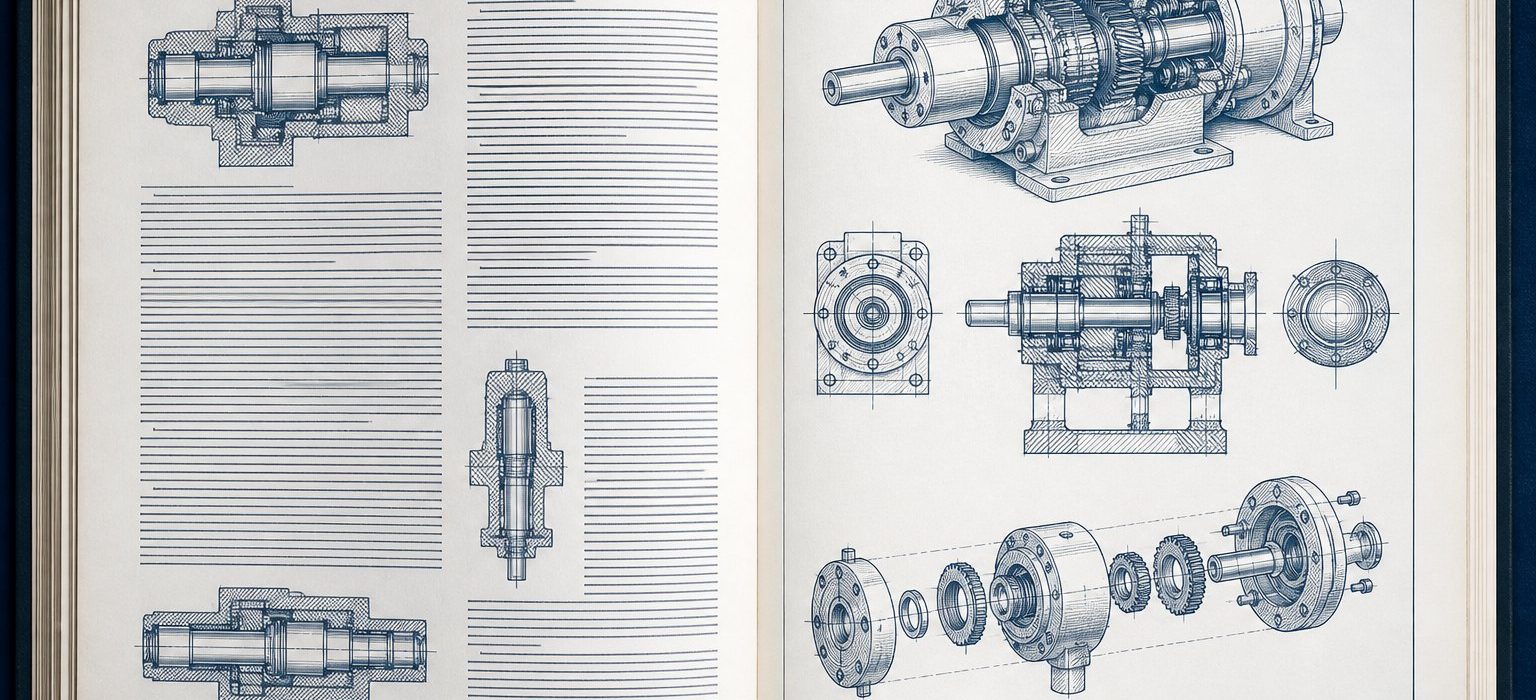
A patent is not an article with a summary at the top. It is a legal instrument with a definition at the bottom, and the parts before that definition exist to support it.
The abstract
The abstract is a search aid. It exists so that someone scanning results can decide whether to open the document. It has no legal effect on what the patent covers, and it is routinely broader in feel than the granted claims — it describes the field the invention sits in, not the boundary of the right.
Reading only the abstract and concluding that a patent “covers” something is the single most common error in patent reading, and it is made constantly in press coverage.
The claims
The claims are the invention. Everything else in the document is context; the claims are the thing that was granted.
They are numbered, and the numbering carries structure. An independent claim stands alone and recites every element it requires. A dependent claim refers back to another claim and adds a further limitation, which makes it narrower, not broader. A dependent claim can never cover something its parent does not.
The critical reading habit is this: every element recited in an independent claim must be present for that claim to read on something. Not most of them. All of them. A device with four of the five recited elements is outside the claim, however similar it looks. This is why the claim count in a record is worth noticing — and why a single-claim patent such as US 5209428 is not a weak one but a specific one.
The specification
Between the abstract and the claims sits the specification: background, summary, and a detailed description of embodiments. Its legal job is to teach the invention well enough that a skilled person could build it, and to support the claims. Language in the specification that never makes it into a claim is not protected, however prominently it appears.
It is, however, where the actual engineering lives, and for a reader interested in what was built rather than what was owned, it is usually the most rewarding part.
The drawings
Figures are numbered and their parts carry reference numerals that recur throughout the specification text. Following a numeral through the document is the fastest way to understand a mechanism — far faster than reading the prose linearly. For design patents the drawings do more than illustrate; they constitute the claim outright.
The front-page data
Filing date, grant date, application number, inventors, assignee and classification all sit on the front page, and each answers a different question. The filing date establishes priority. The gap between filing and grant — often several years — tells you something about how contested the examination was. The assignee tells you who held the right at grant, which is frequently not the inventor.
Every record in this archive lays these fields out in a table and links to the full official document. Start from the patent listing.
Priority, continuations and the family
A patent rarely stands alone. Applicants file continuations, divisionals and further applications claiming priority from an earlier filing, and the resulting group — the family — may cover the same disclosure with several different claim sets granted years apart.
This matters when assessing what a document represents. A patent granted in 2010 claiming priority to a 2001 filing is a 2001 disclosure with a 2010 claim set, and its prior art is judged against 2001. The front page carries the priority information; reading only the grant date will mislead you by most of a decade.
What the front-page dates tell you
The gap between filing and grant is informative once you have seen enough of them. A short gap suggests examination that met little resistance. A long one — five years or more — usually means substantive rejections were overcome, which in turn means the claims that survived were narrowed, sometimes considerably.
Neither is a quality judgement. A quickly granted patent may cover something nobody had tried; a slowly granted one may cover something valuable enough to fight for. But the interval is a real signal and it is free to read.
The parts that are not in the document
Two things a reader will want are not in the granted patent. The prosecution history — the correspondence between applicant and examiner — records what was argued and conceded, and is often decisive in construing a claim. The assignment record shows subsequent transfers of ownership, which the patent itself, fixed at grant, cannot reflect.
Both are held by the patent office. An archive of this kind can point at them; it cannot replace them, and any summary that implies otherwise is overstating what it holds.
A reading order that works
For most purposes, read a patent in this sequence: front-page data first, to place it in time and ownership; then claim 1, slowly, element by element; then the drawings, following the reference numerals; then the specification, for the engineering; and the abstract last, if at all.
That is close to the reverse of how the document is laid out, which is exactly the point. The layout serves the office’s filing conventions. It does not serve the reader.
Every record in this archive presents the front-page fields as a table, the abstract and claims separately, and a direct link to the official document. Start from the patent index.
Reading claim language literally
Claim drafting uses ordinary words in constrained ways, and a few conventions do heavy lifting. “Comprising” is open: a claim reciting elements A, B and C reads on something that has A, B, C and also D. “Consisting of” is closed: the same claim would exclude the thing with D. The difference between the two phrases can decide an infringement case.
Articles matter too. The first appearance of an element is usually “a widget”; later references are “the widget”, pointing back to that same element. Where a claim introduces “a second widget”, it is requiring two. Reading past these small words is how a claim gets misconstrued.
What a patent does not entitle you to do
A common inversion is worth naming. A patent confers the right to exclude others, not the right to practise the invention. Holding a patent on an improvement does not entitle you to make it if doing so falls within someone else’s earlier, broader patent.
This is why patent portfolios in dense fields are so tangled: overlapping rights, none of which can be practised without the others, resolved by cross-licensing rather than by anybody winning. It is also why “we have a patent on it” answers a narrower question than it is usually offered as answering.
None of the above is legal advice, and this archive gives none. It is a description of how the documents are structured, offered so that they can be read accurately. Questions of scope, validity and infringement require a qualified practitioner working from the official record.