History of Invention
From USPC to CPC: How United States Patents Are Classified
Patents are filed into subject classes so related inventions sit together regardless of wording. Two schemes are in play, and older references use the retired one.
Searching patents by keyword fails in a specific and predictable way: the same invention is described in different words by different drafters, sometimes deliberately. Classification exists to defeat that.
What a class is for
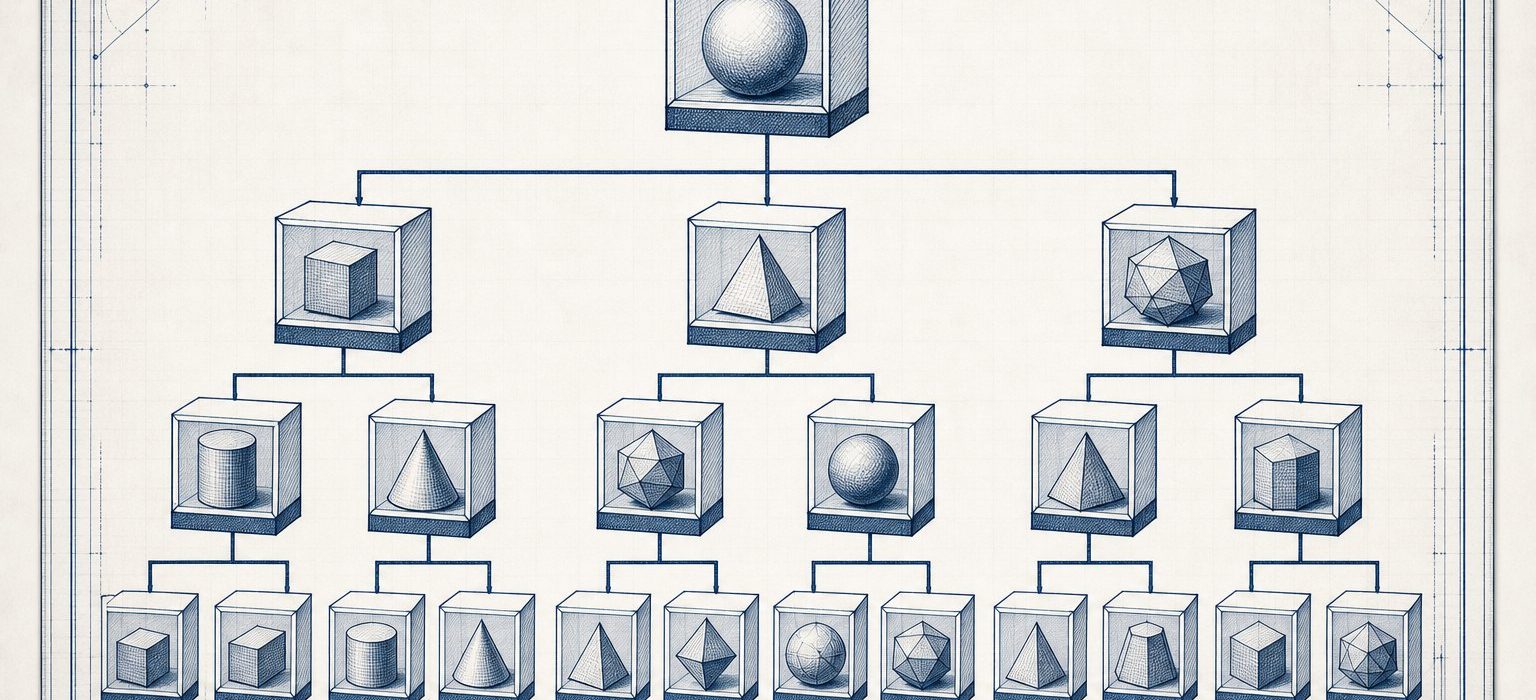
A classification scheme assigns every document a place in a subject hierarchy, decided by what the invention is rather than by the vocabulary the applicant chose. Two filings for the same mechanism, drafted by different attorneys in different decades using entirely different terminology, land in the same class. That is the whole point.
It also means a class is a reading list. Finding the right class for a problem gives you the prior art in that field, including the documents whose wording you would never have guessed.
The two schemes
The United States Patent Classification was the national scheme, used for well over a century. Its classes are plain numbers with subclasses after a slash: class 604 is Surgery, class 181 is Acoustics, class 330 is Amplifiers. It was retired for most purposes but never stopped mattering, because an enormous body of citation, literature and cross-reference refers to patents by their USPC class.
The Cooperative Patent Classification is the current scheme, developed jointly with the European Patent Office and shared internationally. It divides technology into nine sections, each subdivided down to fine groups. A code such as B64C29/0008 reads as section B, class 64, subclass C, then the specific group.
Resolving an old class number
The practical problem readers hit is a reference of the form “class 604” encountered in an old citation, with no obvious way to find out what it means. The classification index in this archive carries the official class titles for the USPC classes most often cited, alongside the CPC sections that hold this archive’s patents.
The two schemes do not map onto one another cleanly, and it is worth being honest about that. A USPC class does not have a single CPC equivalent; the boundaries were drawn differently. What can be given is the broad area of correspondence, which is enough to find your way, and that is what the class pages state.
Section-level browsing, and why
This archive presents CPC at section level rather than pretending to a finer granularity. The nine section titles are official and unambiguous. The subclass titles are not something we hold, and inventing plausible ones would corrupt exactly the thing a reference archive exists to provide. Full subclass codes are printed on each patent record, where they can be taken to the official scheme directly.
Browse the sections from the classification index, or go straight to the full patent listing.
The nine CPC sections
The top level of CPC is short enough to learn, and knowing it turns an opaque code into a rough subject in one glance:
- A — Human necessities: agriculture, foodstuffs, personal and domestic articles, health
- B — Performing operations and transporting: separating, shaping, printing, vehicles
- C — Chemistry and metallurgy
- D — Textiles and paper
- E — Fixed constructions: building, drilling, mining
- F — Mechanical engineering, lighting, heating, weapons
- G — Physics: instruments, measuring, optics, computing
- H — Electricity
- Y — Cross-sectional and emerging technologies
A code such as G01N21/17 therefore announces itself as physics, measuring and testing, before you know anything else about the document.
Why one patent carries several codes
Classification is not a single-assignment exercise. A document receives one code reflecting the invention as a whole and often several further codes covering additional aspects disclosed within it. A patent for an optical measurement technique used on a chemical process legitimately belongs in more than one place.
This has a direct consequence for searching: a class listing is not a partition. The same document appears under several classes, and finding it in one does not mean the others are irrelevant. Patents in this archive commonly carry four or five CPC codes, all of which are printed on the record.
The Y section is different
Sections A through H divide technology by subject. Y does something else: it tags documents that belong to a cross-cutting theme — climate change mitigation technologies, for instance — regardless of where they sit in the main scheme. A Y code is therefore an annotation rather than a location, which is why it can appear alongside any of the others.
Practical advice for an old citation
If you have arrived at a USPC class number from a citation, three steps usually resolve it. Look up the official class title — the classes most often cited are listed with their titles in the classification index. Identify the broad CPC area the subject now sits in, remembering that the mapping is approximate rather than exact. Then browse that CPC section for documents of the right period.
What does not work is assuming a one-to-one correspondence and searching only the supposed equivalent. The two schemes drew their boundaries on different principles, and a USPC class routinely scatters across several CPC groups.
Who assigns the class, and why that matters
Classification is applied by the office, not by the applicant. An examiner determines where a document belongs, based on the invention as claimed. This is why classification is more reliable than title or abstract for finding related work: it reflects a trained judgement about substance rather than a drafter’s choice of words.
It also means classification can shift. Schemes are revised, groups are split and merged, and documents are reclassified in bulk when that happens. A class code cited in older literature may no longer exist under that name, which is a further reason old citations need resolving rather than searching directly.
The limits of classified search
Classification is a powerful tool and an incomplete one. It reflects what was claimed, so an application whose disclosure spans several fields may be classified narrowly by its claims and missed by a search of the other fields. And classification is applied by people, with the variation that implies.
Serious prior-art searching therefore combines classified browsing with keyword and citation searching, using each to catch what the others miss. Citation searching in particular — following what a document cites and what later cites it — surfaces connections no classification captures, because it records a judgement of relevance made by an examiner about two specific documents.
The classification index here supports the browsing half of that, and every record links to its official document, where the citation lists can be followed.