History of Invention
Design Patents and the D Prefix: What a D-Number Actually Protects
A patent number beginning with D behaves differently from every other patent in the record: one claim, no text worth reading, and drawings that are the entire invention.
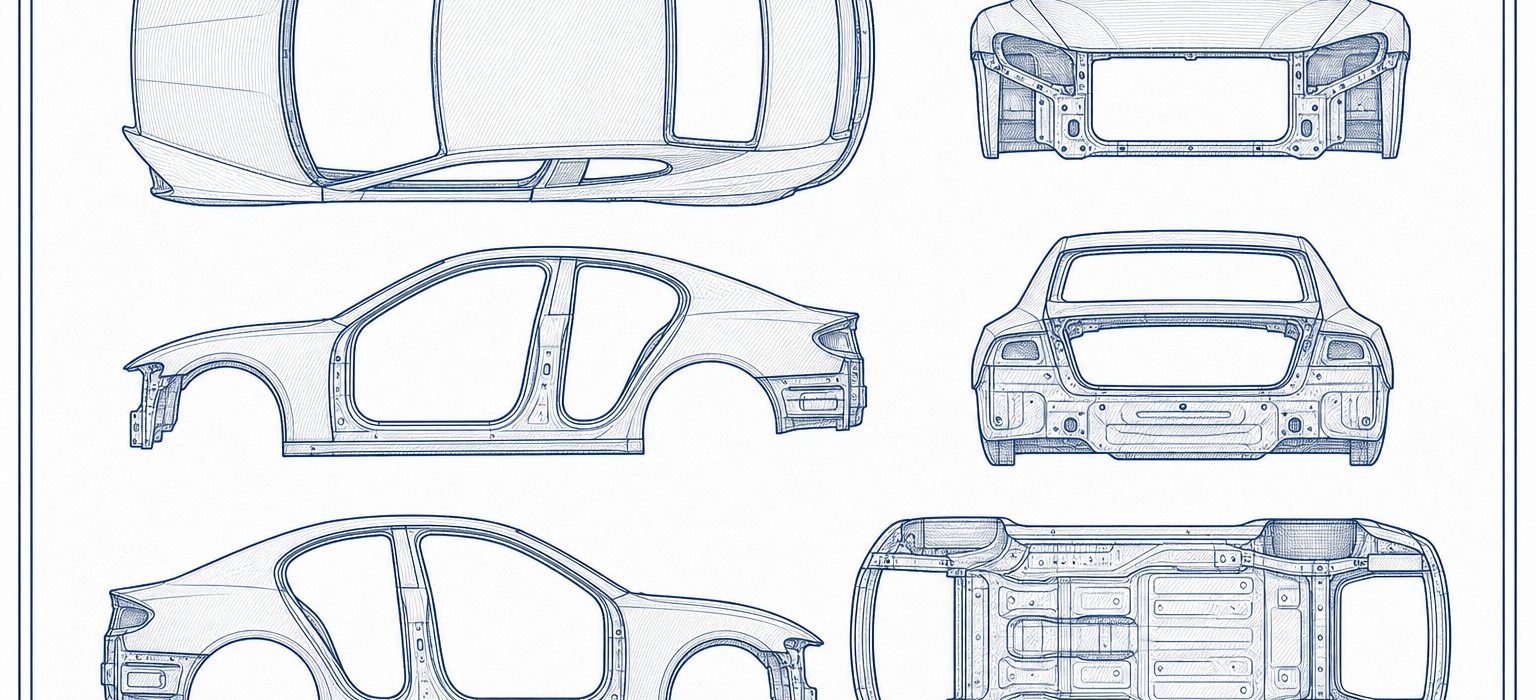
A patent number that begins with the letter D is not a variant of an ordinary patent. It is a different instrument, protecting a different thing, and it has to be read differently.
Appearance, not function
A utility patent protects how something works. A design patent protects how something looks — specifically, the ornamental appearance of an article of manufacture. If a shape exists because it is the only shape that performs the function, that shape is not protectable as a design; the protection covers ornamental choices, the ones that could have been made otherwise.
This split explains the most conspicuous feature of design patents: the term of protection, the examination process, and the scope of the right are all narrower and more specific than for utility filings.
One claim, always
Every design patent has exactly one claim, and it is close to boilerplate: the ornamental design for the article, as shown and described. The claim text carries almost no information. The drawings carry all of it.
This is the single most important thing to understand about reading them. In a utility patent, the drawings illustrate and the claims define. In a design patent, the drawings are the definition. Solid lines show what is claimed; broken lines show environment that is not. Two design patents whose drawings differ only in which lines are broken can have materially different scope.
What the archive holds
This archive currently holds five design patents. They are instructive as a group precisely because they span such different articles:
- US D310053 — a motorcycle
- US D321173 — a personal computer housing
- US D622633 — a vehicle body, toy replica and other replicas
- US D668998 — a motor vehicle and toy replica thereof
- US D669401 — an automobile
Three of the five concern vehicle bodies, and two of those explicitly extend to toy replicas. That phrasing is deliberate: it addresses the scale-model market, where the ornamental design of a car reappears on an article of an entirely different size and purpose.
Practical consequences
Because the drawings define the right, a design patent is at once easier and harder to assess than a utility patent. Easier, in that there is no claim language to construe. Harder, in that the comparison is visual and the standard is what an ordinary observer would find substantially the same — a judgement that resists reduction to a checklist.
All five records above link out to their full official documents, where the drawing sheets that constitute the actual claim can be examined. Nothing in a summary can substitute for looking at them.
The infringement standard
Design patent infringement turns on whether an ordinary observer, familiar with the prior art, would find the two designs substantially the same — substantially enough to be deceived into purchasing one supposing it to be the other. There is no element-by-element comparison of the sort a utility claim demands, because there are no elements to compare, only an appearance.
That standard has two practical effects. Small differences rarely save an accused design if the overall impression matches. And the prior art matters enormously: in a crowded field where many similar designs already exist, an ordinary observer discriminates more finely, and the scope of any one patent narrows accordingly.
Broken lines are the drafting instrument
Because the drawings define the right, the choice of what to draw in broken lines is the single most consequential drafting decision in a design filing. Broken lines show environment: context that helps the reader understand what the article is, while remaining outside the claim.
A filing that shows an entire product in solid lines claims that entire appearance, and is correspondingly easy to design around — change any visible part and the overall impression shifts. A filing that shows one portion solid and the rest broken claims only that portion, wherever it appears. The second is usually the stronger right, and it looks, to an untrained eye, like the weaker drawing.
Why toy replicas appear in the titles
Three of the five design patents in this archive concern vehicle bodies, and two say so in terms that extend explicitly to toy replicas. This is not incidental phrasing. A design right attaches to the ornamental appearance of an article of manufacture, and a scale model is a different article from the car — different size, different purpose, different market.
Drafting the title and claim to reach the replica is how a manufacturer keeps control of its vehicle’s appearance in the licensed-model market, which is commercially significant in its own right. It is a good illustration of the general point that design filings are drafted with a specific commercial geography in mind, and that reading them without that context makes the wording look stranger than it is.
Where to look next
All five design records in this archive link to their official documents, where the drawing sheets can be examined directly. There is no substitute for looking at them: a summary can describe a design patent but cannot show you the claim, because the claim is a picture.
The wider listing is at the patent index.
Term, and why it differs
Design and utility patents run for different terms, calculated from different starting points — utility from filing, design from grant. The practical effect is that a design right’s expiry is not predictable from the filing date alone, which matters when clearing a product against an older design.
The examination is also different in character. There are no claims to negotiate, so prosecution turns on the drawings: their consistency across views, whether the broken and solid lines are used correctly, and whether the design is ornamental rather than dictated by function. Objections are frequently formal, about the drawings themselves, rather than substantive about novelty.
When both kinds are filed together
A product can be covered by both a utility patent and a design patent, and for consumer goods this is routine. The utility filing protects the mechanism; the design filing protects the look. They do not overlap, and neither substitutes for the other.
Reading a portfolio, the presence of design filings alongside utility ones is a signal about the market: it indicates a product whose appearance carries commercial weight independently of what it does. The vehicle-body designs in this archive are exactly that case, which is why they extend to replicas.
The complete listing, utility and design together, is at the patent index.